
The first hours
Water spreads into everything porous it touches: carpet and pad, the bottom of drywall, baseboards, cabinet bases and subfloor. Finishes start to stain, and anything made of particleboard or MDF begins to absorb water and swell. This is the stage where fast extraction saves the most material.
24 to 48 hours: mold can start growing
The U.S. Environmental Protection Agency advises drying water-damaged areas and materials within 24 to 48 hours to prevent mold growth. After that window, mold can start growing on damp drywall paper, wood and dust, often inside the wall cavity or under flooring, where nobody sees it.
Days to weeks: damage you can see and smell
- Swollen cabinet bases, door casings and baseboards that no longer close or sit flat
- Cupped or buckled wood and laminate floors
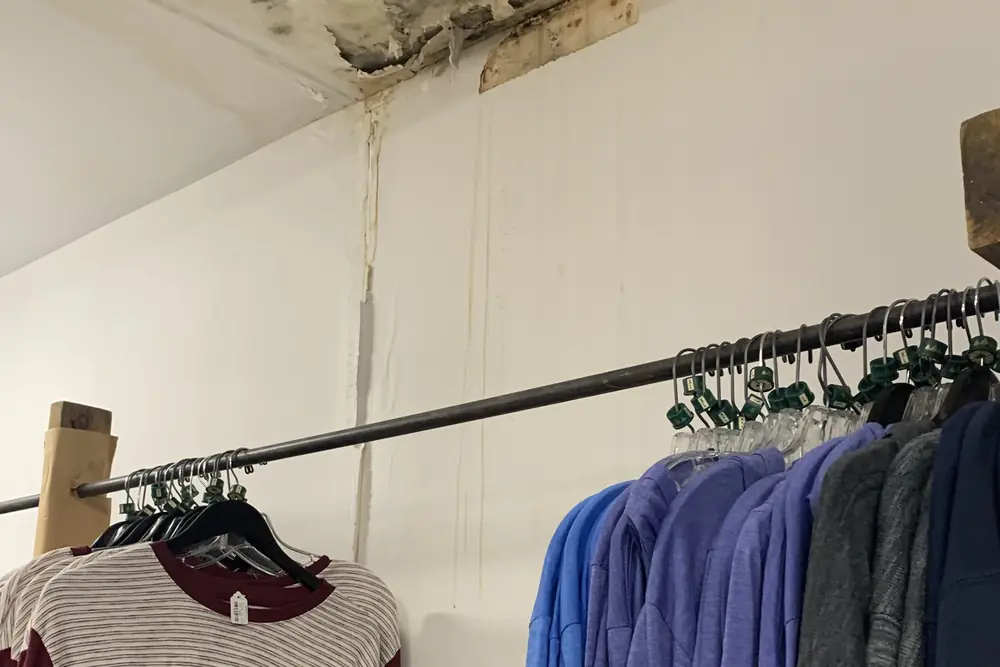
- Peeling paint, bubbling texture and spreading stains
- A musty odor that keeps coming back
- Rust on fasteners and corrosion of metal components
Months: problems inside the structure
Framing, subfloor and sheathing that stay damp for a long time can begin to rot. Moisture trapped behind finishes keeps feeding mold and can attract insects. At this stage the repair is no longer “dry it out”. It means opening walls and floors and replacing structural material.
Health and insurance
Mold and dampness can affect indoor air quality, especially for people with allergies or asthma. Insurance is the other risk. Many policies treat sudden, accidental water damage differently from damage caused by a long-term leak that was not addressed. Read your own policy and talk to your agent, but in general, prompt action and good documentation work in your favor.
Why “it feels dry” is not enough
Surfaces dry faster than what is behind them. A wall can feel dry to the touch while the bottom plate and the drywall behind the baseboard are still wet. That is why we measure moisture instead of guessing, and keep drying until the readings reach the dry standard.